2026-10-07 · Leilani Kamaka
How Humidity Spikes During Kona's Rainy Months Affect AC Performance
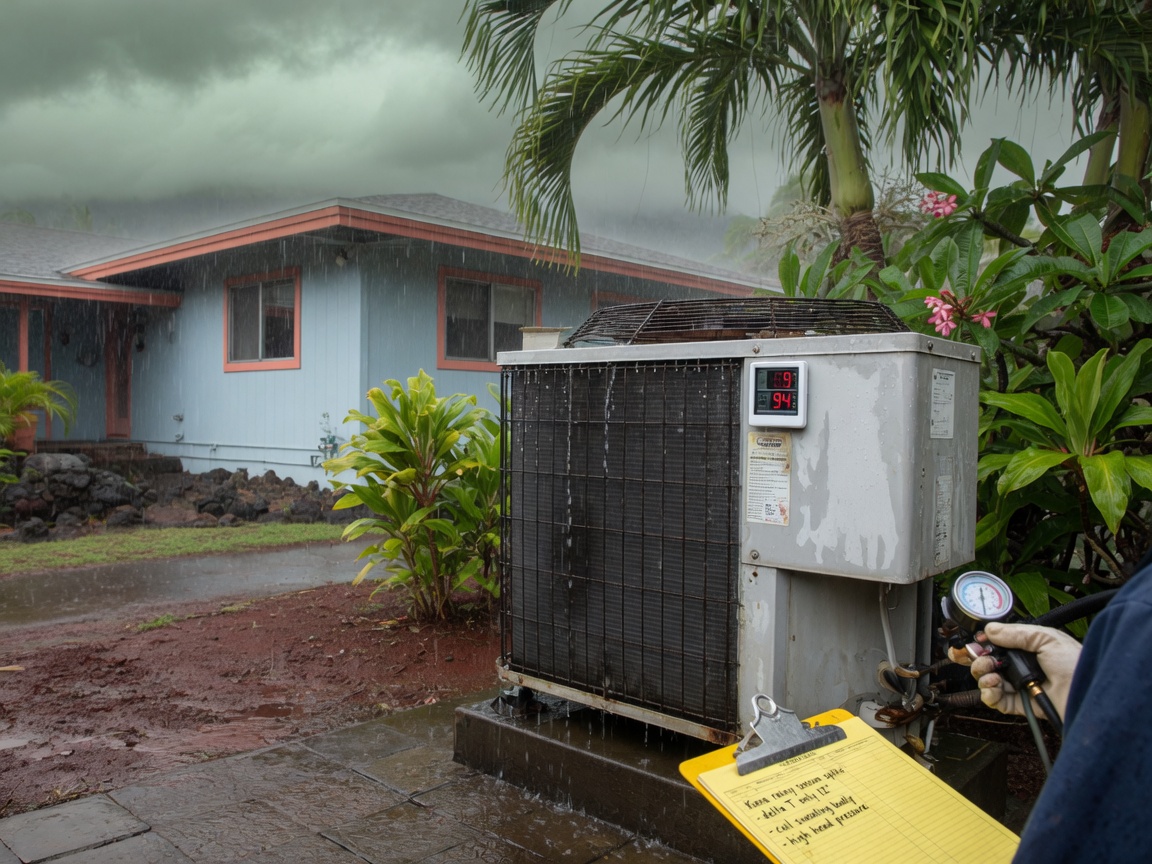
During Kona's rainy months humidity often climbs above 80 percent along the leeward coast, causing AC systems to run 20 to 40 percent longer to reach the same thermostat setting in Kailua Village and Holualoa homes. This extended operation stems from the added latent load as moist air infiltrates single-wall construction common in older neighborhoods near Kailua Pier and Hulihee Palace.
Humidity Patterns on the Leeward Coast
Kona's leeward location receives occasional showers that quickly raise outdoor relative humidity while temperatures stay in the mid-80s. These brief but intense moisture events differ from the steady trade-wind patterns seen in Hilo or Keaau. Homes built on the slopes above Magic Sands Beach experience rapid indoor humidity rise once windows are opened during showers. The porous lava rock and older single-wall homes common in Holualoa allow more infiltration than newer concrete-block structures in Keahole. As a result the evaporator coil must remove far more moisture before the thermostat senses a temperature drop, extending each cooling cycle by several minutes.
How Excess Moisture Alters AC Operation
When humidity spikes the AC first prioritizes latent heat removal over sensible cooling. The evaporator coil stays wet longer, lowering its effective temperature and reducing airflow across the fins. In central systems serving two-story homes in Kailua Village this can drop supply-air temperature by an extra 3 to 5 degrees before the unit cycles off. The compressor therefore stays engaged through more of the day, raising energy use and accelerating wear on the contactor and capacitor. Properties near the shoreline also contend with salt-laden air that mixes with the extra condensate, creating a thin film on coils that further restricts heat transfer.
Component Stress During Extended Cycles
Longer runtimes increase refrigerant pressure on the high side and reduce oil return to the compressor. In ducted systems the blower motor runs hotter because it moves the same volume of air against higher static pressure caused by a wet coil. Homeowners in Keahole often report the first signs as uneven temperatures between upstairs and downstairs rooms. Condensate drains sized for drier conditions can overflow during multi-day humidity events, leading to ceiling stains in Holualoa residences. These mechanical stresses accumulate faster than in drier months when cycles remain short.
Practical Steps to Restore Performance
Scheduling AC Maintenance before the rainy season begins keeps coils clean and drains clear so the system can handle the added moisture load. In homes where humidity remains elevated after the shower passes, a dehumidifier installation tied to the existing ductwork reduces the latent burden on the AC. Readers dealing with shoreline properties may also benefit from reviewing Clearing Salt Buildup on AC Coils Near the Kailua-Kona Shoreline and What Vog Does to AC Filters and Airflow on the Kona Coast for additional seasonal considerations. Consistent filter changes and verified drain flow remain the most direct ways to keep runtime within normal ranges when humidity spikes occur.